Dr. Ancel Keys

Dr. Ancel Keys

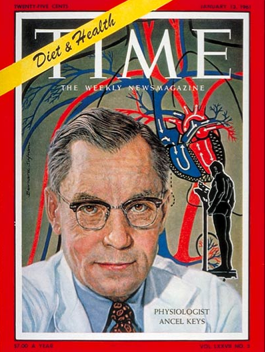
Dr. Ancel Keys, January 13, 1961 issue of Time

A recent article published in the Annals of Internal Medicine (Ann Intern Med. 2014;160:398-406; March 18, 2014) reported on a meta analysis of over seventy population studies (but it considered many more that were not included because of inadequacies of some kind) concerning the roles of dietary fat on Coronary Heart Diseases (CHD). The authors came to the conclusion that intake of saturated fat was not highly associated with cardiovascular disease.

Although this may be shocking to some, it is not shocking to some researchers who have been following this field for thirty years or more.

Before reviewing the major findings of this study, I would like to take you on a walk through the history of this topic. The start of the major interest in this topic took place in the late 1940s and early 1950s when middle aged American men started to have heart attacks in astronomically large numbers. Researchers at the time began investigations into why these heart attacks were happening.

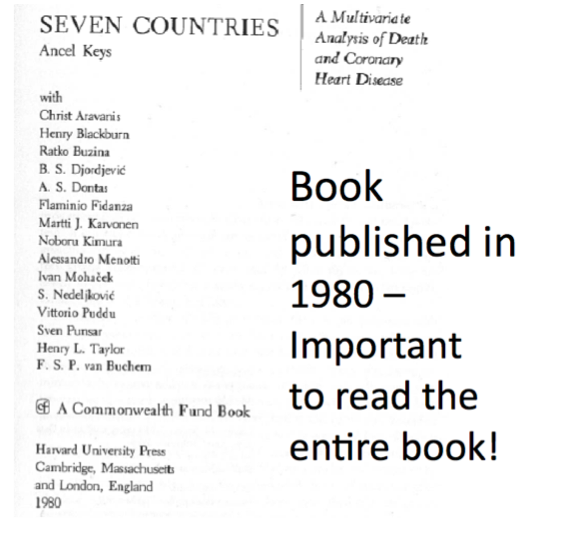
The premier study at that time was “Seven Countries” Study that was directed by Dr. Ancel Keys, a renown epidemiologist at the University of Minnesota. This was a massive study that followed 12,763 men, aged 40-59, from seven countries: Finland, Greece, Italy, Japan, the Netherlands, the United States, and Yugoslavia. The overall findings (from many published articles) of these studies, including the 10-year follow-up, were published in a book, “Seven Countries” by Ancel Keys (1980).

Interestingly, the “Seven Countries” study was stimulated by the basic observations that blue collar workers suffered less heart attacks than white collar workers, and that high serum cholesterol was associated with higher heart attacks in these workers.

These observations were certainly true, but the interactions of lifestyle factors were more complicated than initially realized by Dr. Keys and co-workers. Also, there were several powerful confounding factors present at the time that made the actual conclusions difficult to discern clearly.

Dr. Keys’ main conclusions presented in the 1980 book were (from page 341): “Our ten year finding, and concordance with other studies, make it clear that the big three risk factors for coronary heart disease now established are age, blood pressure, and serum cholesterol. The findings about cigarette smoking as a risk factor indicate that here, too, relationships are not as simple as first supposed.”

One important problem with the Seven Countries Study was that in the US cohort, over 50% of the subjects (men) were current smokers and many were former smokers (approximately 30%).

Smoking was also high in the other populations studied. Therefore, this study is primarily concerned with smoking males, and the conclusions drawn from it may only precisely apply to this group of humans.

Let’s step back and discuss what happened in the early 1950s to cause the epidemic of heart attacks among middle age American men?

A reasonable scenario is that most of these men were caught in the following situations:

1)Most were victims of participating in World War II and were subjected to very high stress, now known to be an initiator of early coronary plaques.

2)Furthermore, most of these men were initiated into the habit of cigarette smoking by their respective armed forces.

3)American men back from service in the Armed Forces went back to college and thereafter led, for the most part, sedentary lives.

4)And finally, an increase in their standard of living did increase the intake of fat (especially saturated) in the forms of increased animal product intake (meat, milk, butter). In fact, the data on per capita consumption indicates that the intake of fat during the 1950s was the highest ever recorded for most Americans, somewhere approaching 40-45% of the total Kcal intake was from fat.

These events happened relatively simultaneously, and could be construed as a “perfect storm” for an increase in heart attacks and other forms of cardiovascular disease.

Although there were several factors responsible, the factor that was probably blamed the most (by researchers and officials) at the time was serum cholesterol (and the intake of fat, especially saturated fat, in the diet) because other studies indicated that high intakes of saturated fat did, in fact, increase serum cholesterol.

However, if you read Ansel Keys’ book all the way through, you will find a balanced view of the fat/cholesterol hypothesis presented by the author. Right in the beginning of the book, Dr. Keys states that there are observations he can’t explain. And one of the major findings that is often misconstrued is that the major point Dr. Keys actually made was that serum cholesterol was associated with CHD primarily at the higher levels of serum cholesterol.

After the early reports from Ansel Keys and other researchers, there was a concerted effort by certain government panels and private organizations to lower dietary fat, especially saturated fat, in the American diet.   Although the exact reasoning and outcomes have been debated, beneficial effects on health were eventually observed with a ten year delay, after the public responded to these recommendations.

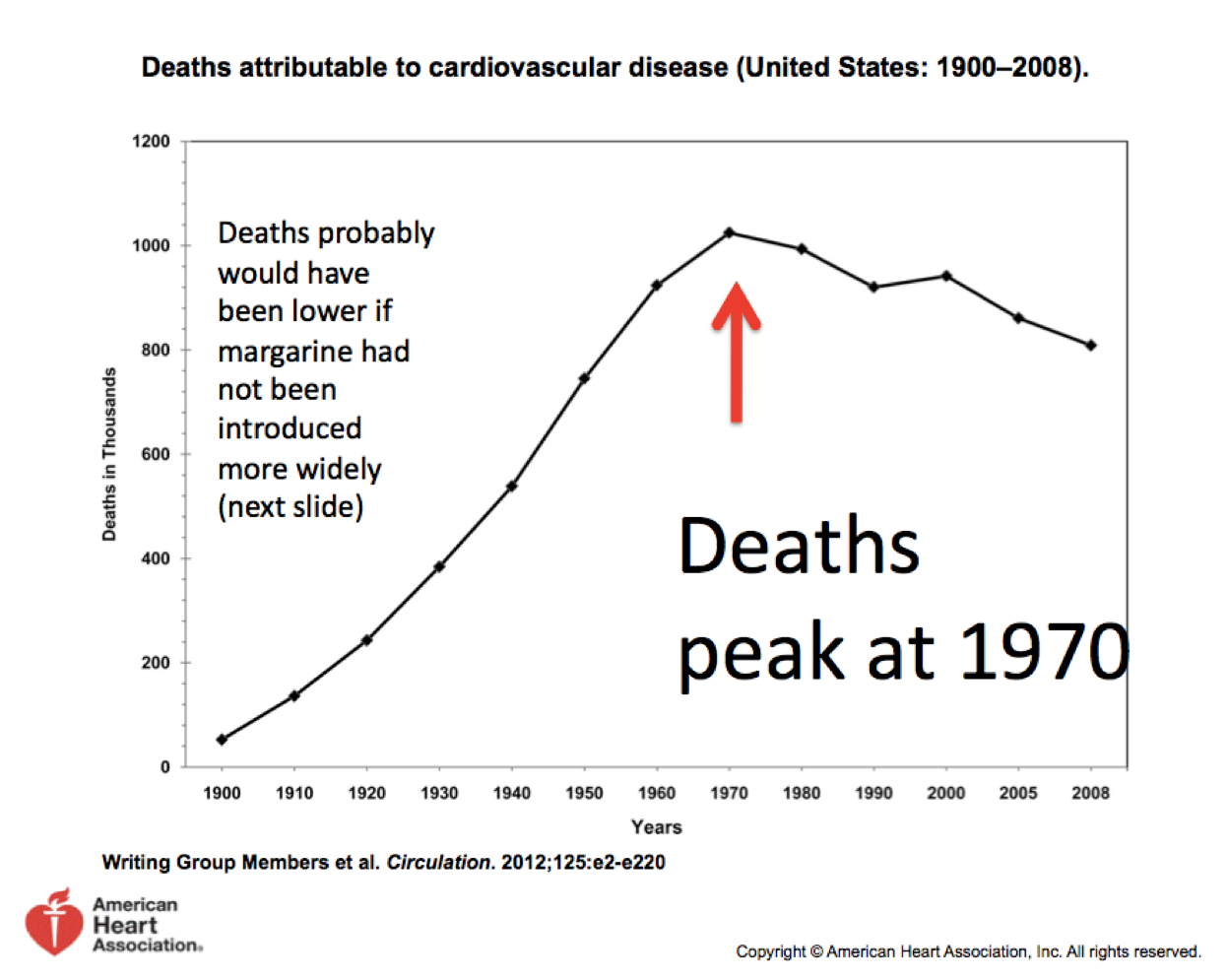
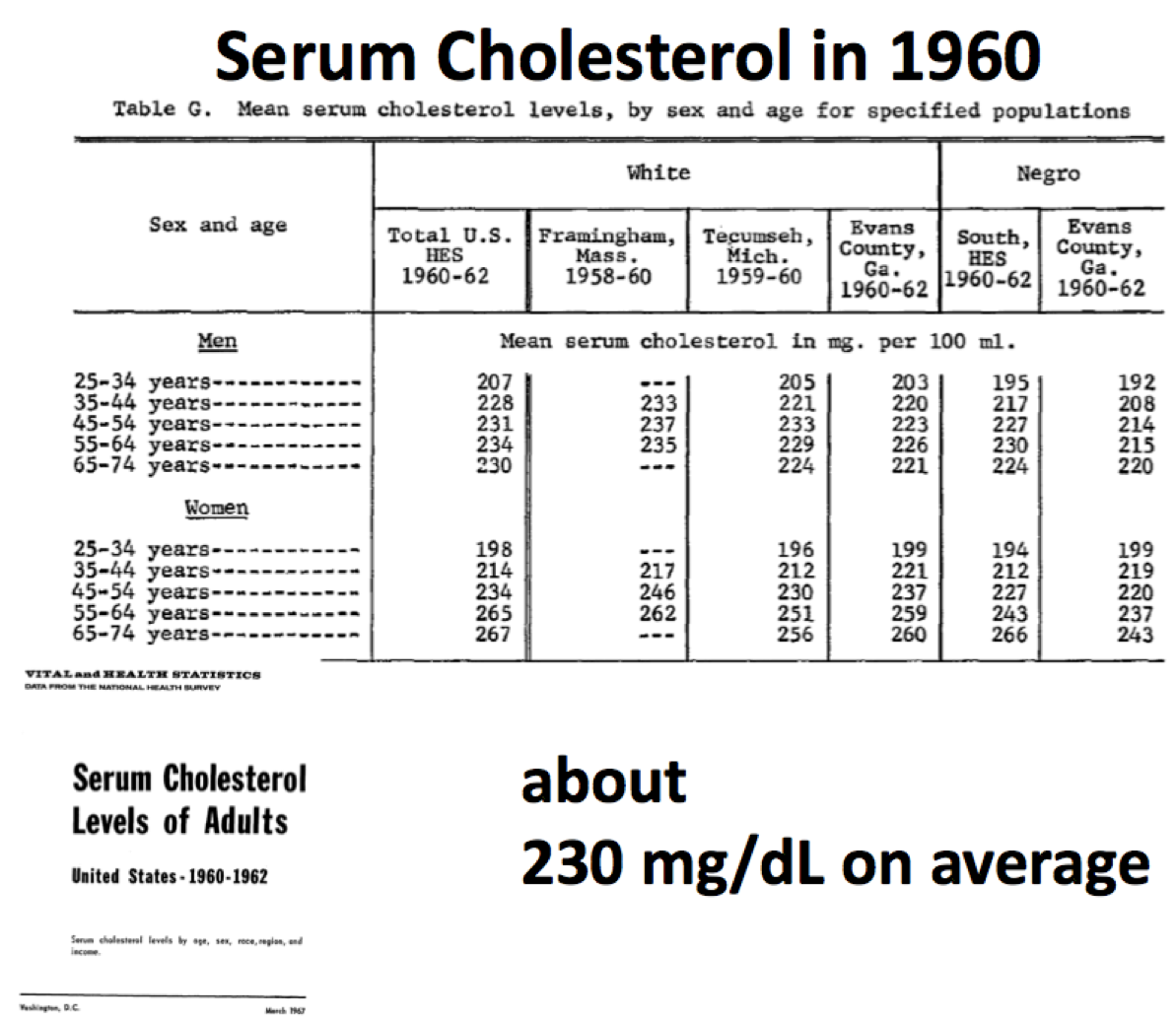
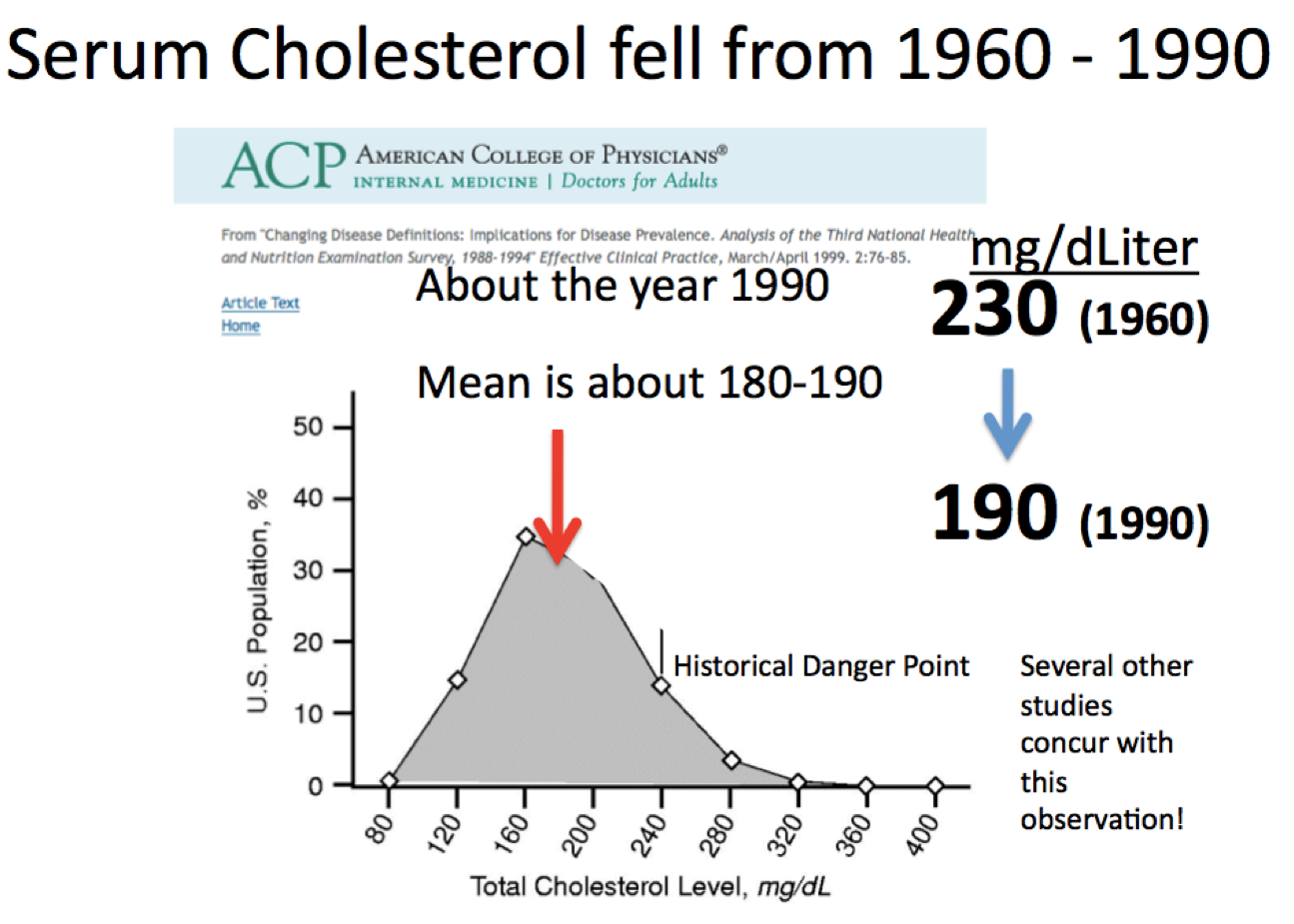
For example, in 1960, several studies measured blood cholesterol at 230 mg/dl in American adults. By 1990, the mean serum cholesterol concentration in American adults had fallen to 190 mg/dl. During this time, the numbers of heart attacks peaked in about 1970 and started to progressively fall afterwards (See data from the AHA below). And after statin drugs were introduced starting in the 1980s, the results were that many men who would have died in their 40s & 50s, died of heart attacks much later, such as in their 70s & 80s. My father had his 1st attack at the age of 85. Many of us have benefited greatly by having our fathers 20-30 yrs longer because of Ansel Keys and the those who proposed the cholesterol hypothesis.

However, this story is very complicated, and I will continue the story in later posts. Below are a series of original figures and tables from the book, “Seven Countries,” by Ansel Keys and many of his co-workers. I have inserted arrows and comments throughout!

The figures below were selected and copied from Ansel Key’s Book.
Seven Countries Title Page

Seven Countries Title Page

Ancel Keys Table clearer

This is an interesting table since it shows that the US cohort did not match the other cohorts in level of physical activity. Another blinding observation that can be made from this data is that physical activity appears to protect against coronary heart disease. However, analysis of the entire study indicated that lack of physical activity was not a risk factor. One wonders whether there was a problem in measuring level of physical activity in all the different locations of the study. This problem remains today although the development of specialized activity monitors may help with this type of analysis in the future.
Ancel Keys Cant Explain clearer


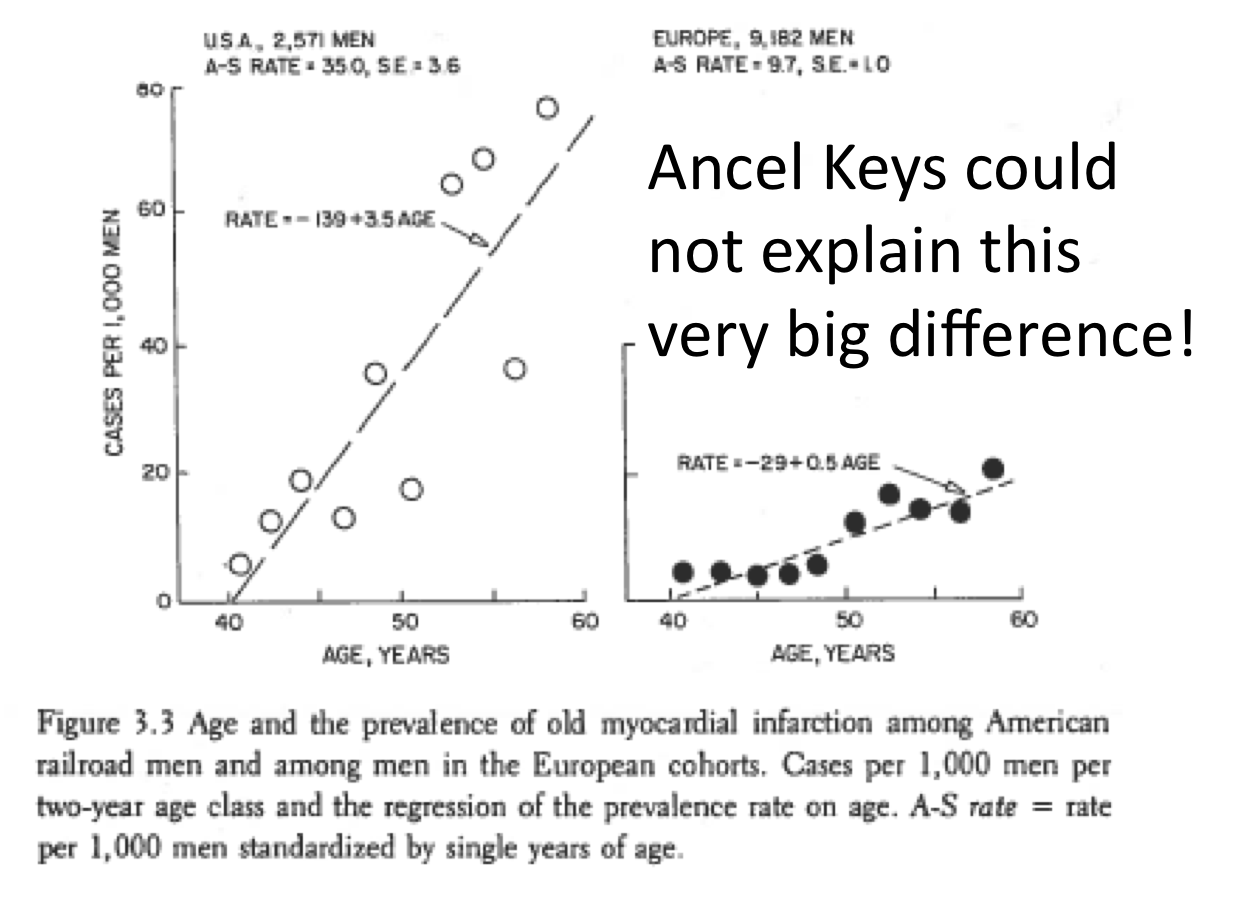
Ancel Keys could not explain the above large difference in CHD deaths between the US cohort and the European cohorts. In part 2, I suggest some hypotheses that explain this major difference.
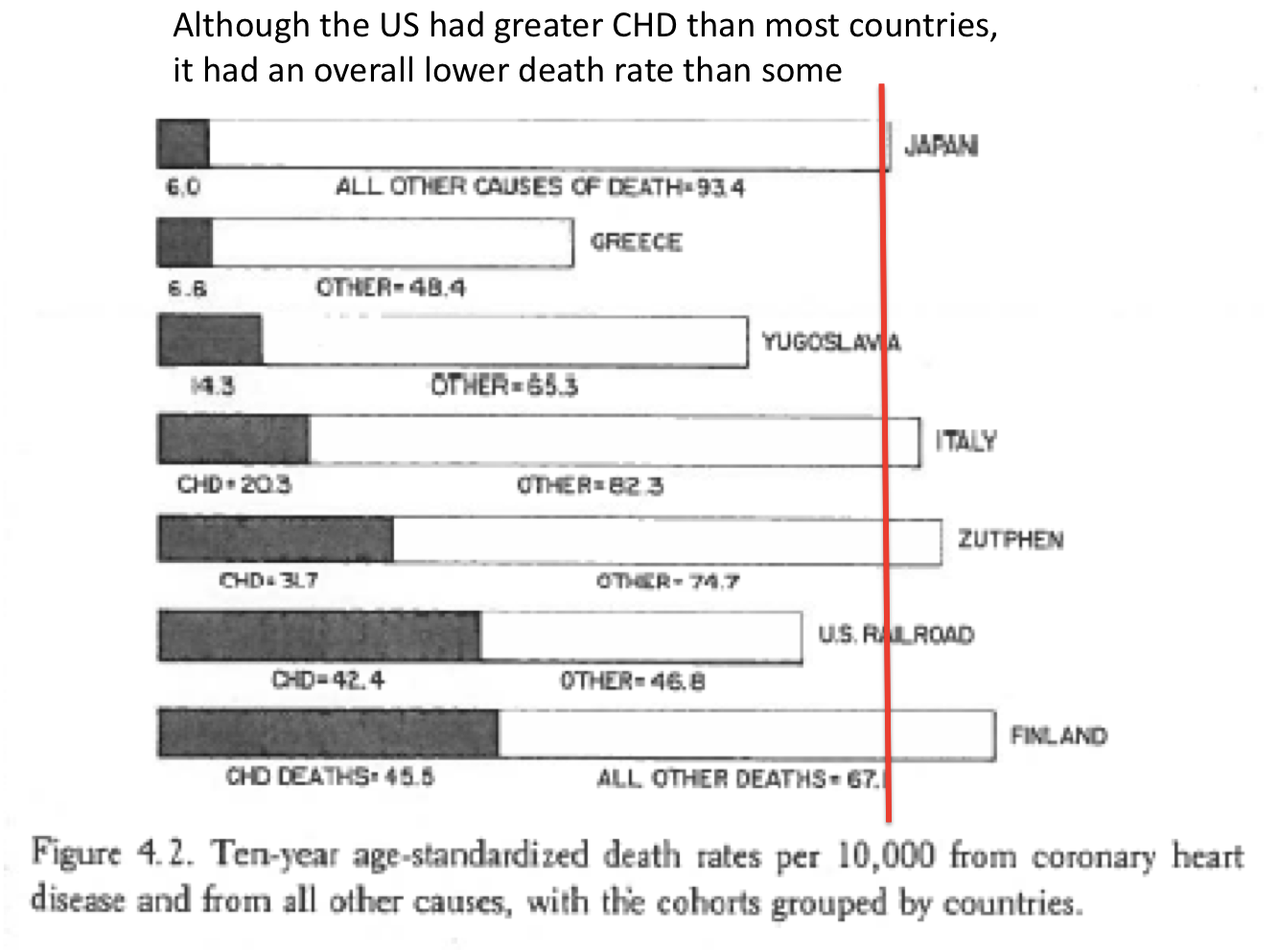
 

Ancel Keys all deaths clearer

Note that although US CHD deaths were higher than most other countries, the overall death rate was not as high in most cases. This reflects other aspects of life such as availability of antibiotics, basic quality of the overall diet, and physical environment factors such as reliable transportation and sanitation.
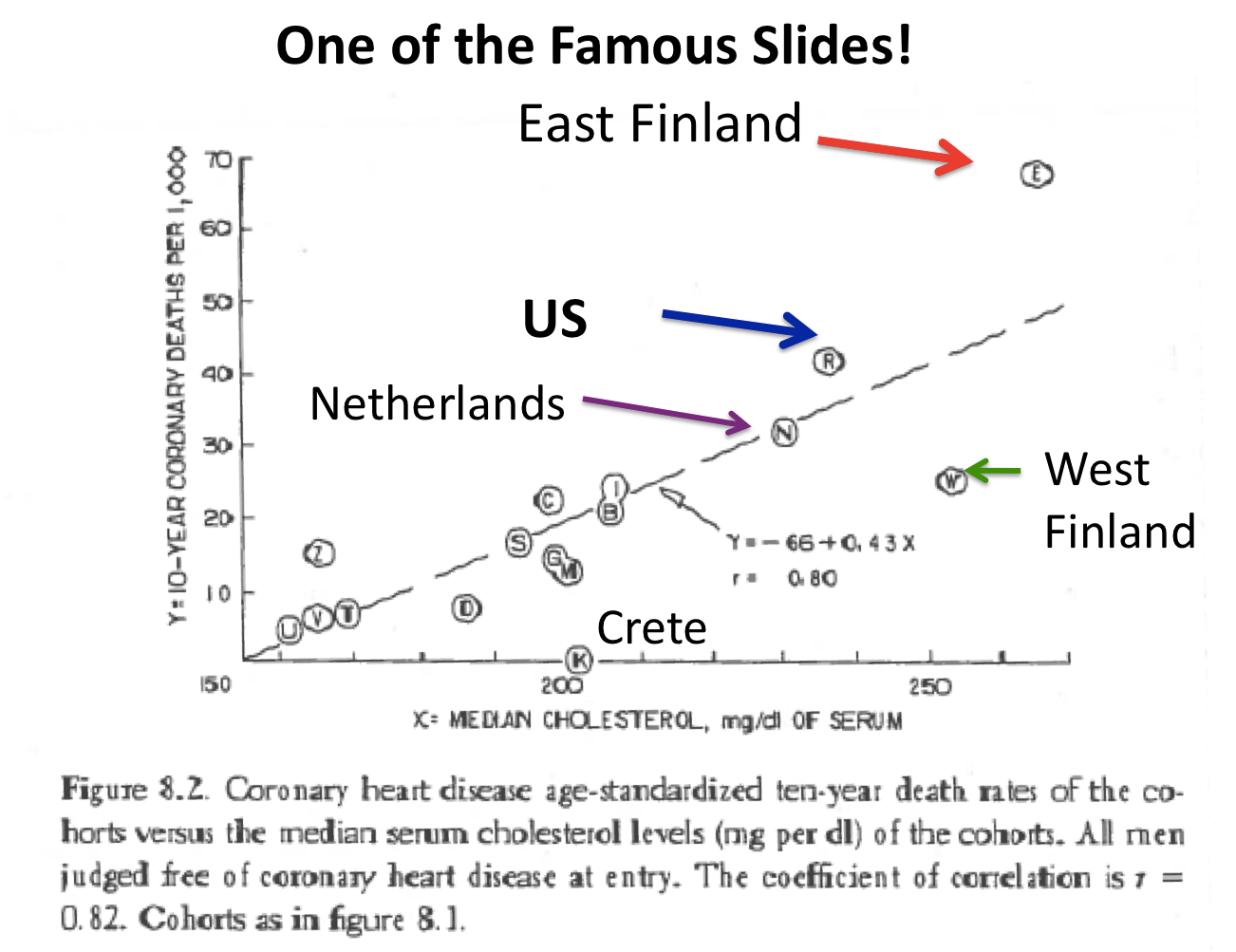
 

Ancel Keys vs cholesterol clearer

This is the famous relationship where coronary heart disease
was highly associated with serum cholesterol levels across the “Seven Countries.” As will be described later, this relationship is complicated by many factors.
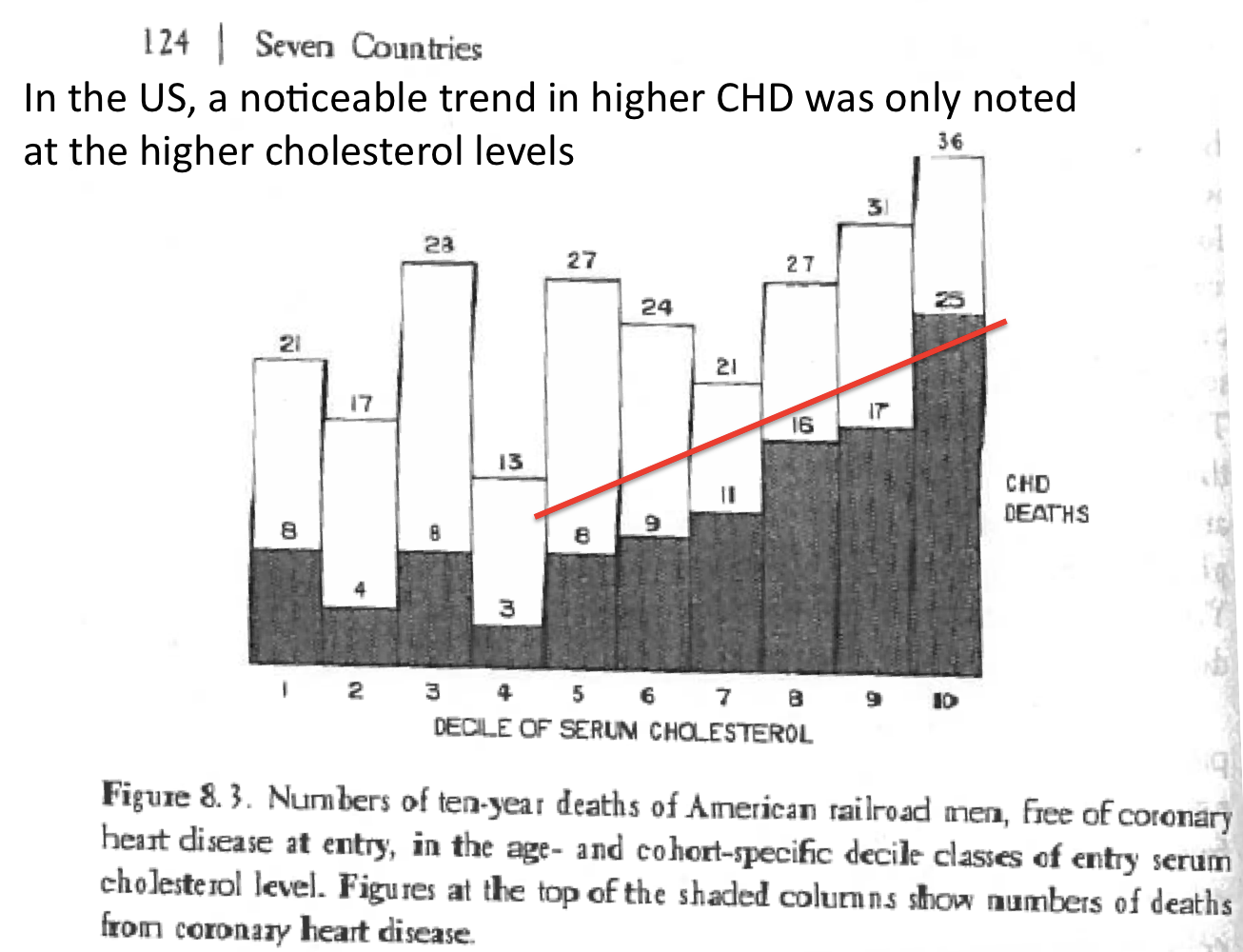
 

Ancel Kets vs chol only in US clearer

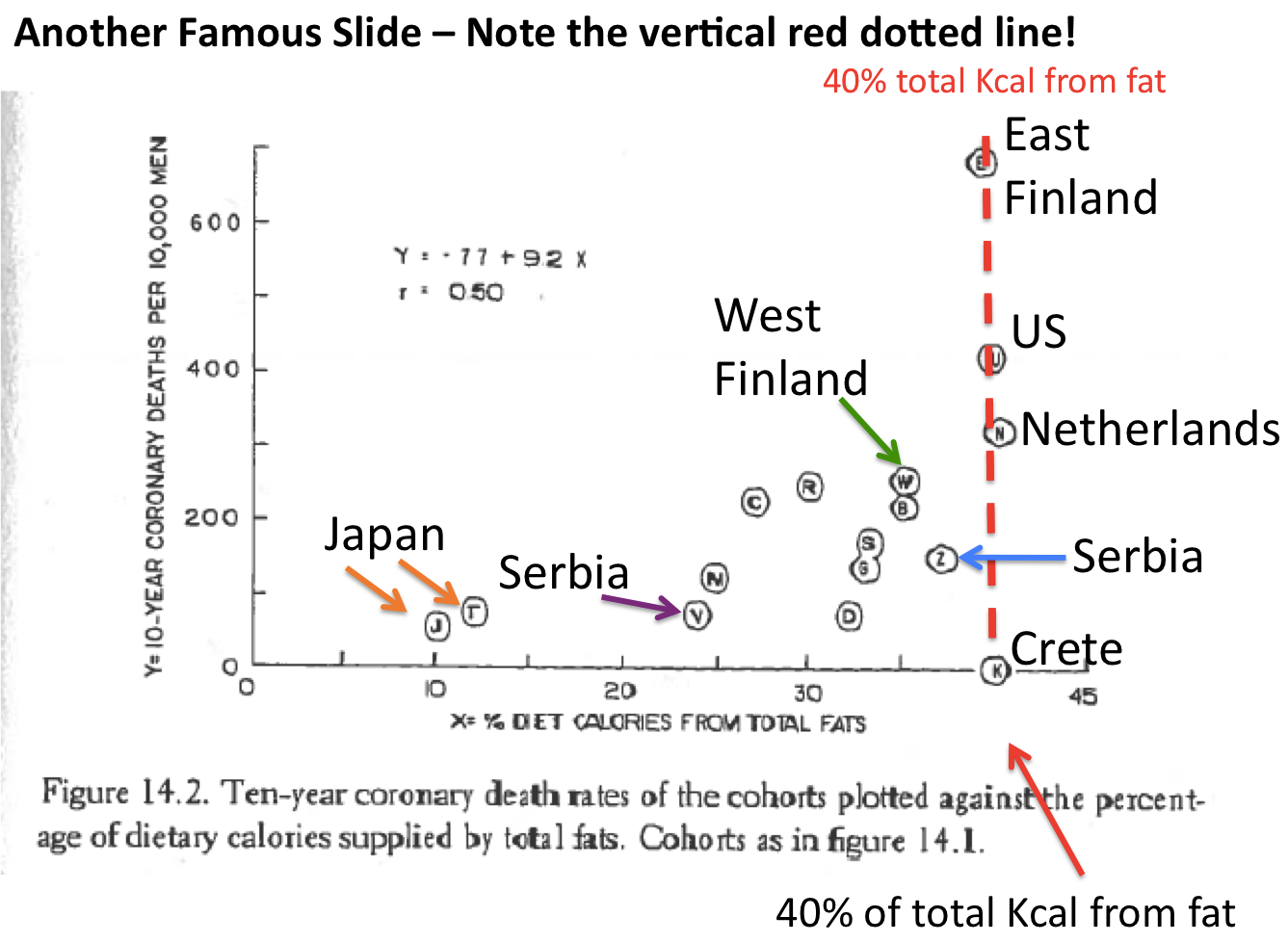
Ancel Keys total fat intake across coutries clearer

The relationship of CHD deaths with total intake of fat is another famous relationship from the “Seven Countries” study. I have drawn a vertical red dotted line at 40% of total Kcal from fat. The data points along this line show that the effects of total dietary fat is complicated and modulated by other factors. The data point for West Finland is interesting because this area did, indeed, have a very high intake of fat that was enriched in saturated fat from animal sources. The high number of deaths due to CHD certainly fits Dr. Key’ hypothesis. The data point for deaths in the US cohort reflects diet and many other factors that we will discuss in detail later. The point that was most interesting was that from the Crete cohort. Although men from Crete consumed a high fat diet, there were zero deaths from CHD. We now know that this reflects their consumption of the Mediterranean diet and the protective effects of a high intake in marine fats that contain omega-3 fatty acids. This data illustrates the importance of the type of fat consumed.
 

Ancel Keys Chol in 1960

Ancel Keys Chol in 1990 clearer


Ancel Keys AHA deaths peak clearer

In 1960, several studies measured blood cholesterol at 230 mg/dl in American adults. By 1990, the mean serum cholesterol concentration in American adults had fallen to 190 mg/dl. Although there was a lag of 10 years, the epidemic of deaths from CHD started to decrease starting about 1970 (Last Slide). Again there may be many factors involved in this turn around, but the decline in serum cholesterol concentrations must be an important contributor.

Part II Will be Posted in a Few Weeks!

The art world is aghast at another major forgery case allegedly carried out in a middle class neighborhood house located in Queens, New York.

The story really started in the mid 1990s but problems with several 20th-century Abstract Expressionist paintings were first detected around 2004.  One painting purportedly by Jackson Pollack was bought in 2007 from New York City’s Knoedler Gallery and its president, Ann Freedman, by hedge-fund manager Pierre Lagrange for more than $17 million.  

James Martin, of Orion Analytical, examined the paint and found ingredients that are “inconsistent and irreconcilable” with the painting being painted by Pollack.  Martin discovered that pigments found in the paint were not available until 1970, many years after Pollack died in a car accident in 1956.  Lagrange sent Knoedler Gallery an email on November 29, 2011 demanding his money back.  The gallery closed the next day.  (See Vanity Fair and Art News links below).  Now the full story of the massive forgery caper is starting to emerge.  (See recent New York Times articles below). Ann Freedman had been buying what she thought were authentic paintings through a gallery dealer named Glafira Rosales.  Although Ms. Rosales supposedly had a secret source that had inherited the art from a recently deceased parent who was an art collector, apparently a local forger produced the paintings.  The alleged forger who created paintings modeled after popular Modern artists was found to be working in Woodhaven, Queens, NY.  Mr. Pei-Shen Qian is a 73-year old Chinese immigrant who moved to the US more than thirty years ago.  He had difficulty selling his own artwork and therefore he copied art works by well-known artists that were sold through the years for a total of 80 million dollars.  The paintings he allegedly copied were purportedly by artists such as Willem de Kooning, Jackson Pollock, and Mark Rothko as well as others.  Glafira Rosales sold the copies allegedly painted by Mr. Qian to Knoedler & Company, one of New York City’s oldest galleries.  Rosales discovered Mr. Qian selling his own art on the streets of New York. Works he may have painted were sold to galleries starting in the mid 1990s.  The FBI were brought in to investigate as late as 2009.  Apparently, customers relied upon the reputation of the Knoedler gallery and documentation from art experts. Mr. Qian and his wife, Qiu Yue Xu, returned to China a few months ago.  This story demonstrates that astute, extremely rich business people can be swindled into purchasing fake artworks costing millions of dollars.  As this story is still being developed we need to wait to learn all the details.

Sources:

http://www.vanityfair.com/culture/2012/05/knoedler-gallery-forgery-scandal-investigation

Following Suits

Prosecutors Are Contemplating More Arrests in $80 Million Art Fraud Case, By WILLIAM K. RASHBAUM; Published: August 19, 2013 New York Times

Struggling Immigrant Artist Tied to $80 Million New York Fraud, By SARAH MASLIN NIR, PATRICIA COHEN and WILLIAM K. RASHBAUM; Published: August 16, 2013 New York Times

Posted by: Joseph Dixon | August 13, 2013

Why did I write this novel?

I am a biologist at Rutgers University and after 25 years of scientific writing, I needed to try writing that was less constrained and allowed my imagination to take off.

Writing for Scientific articles is extremely laborious and restrictive.  One must keep to the facts and observations and it is frowned upon to express opinions.  Before being accepted for publication, articles are peer-reviewed by at least two other scientists and they can request that you remove excess discussion or “tone down” conjecture.  Therefore, having a different avenue for expressing ideas, opinions and feelings is definitely uplifting for me.

Also there are issues that are raised in the novel that I wish to explore.

In a previous post I addressed “The underlying drive for the scientific endeavor” and I described three aspects of this (albeit succinctly).

Other topics approached and incorporated in the novel are:

1)  The science in “Search for the Garden” is real – it is CSI but reality based.   What I mean by this is that what we do in the lab to identify chemicals in samples is a little more complicated than what is shown on CSI on TV.  Never-the-less, it is extremely cool and the hard part is describing it without being techno boring.  Having to analyze the paint of a masterpiece painting is a vehicle for explaining our capabilities on a more interesting level – I hope.

2) Oil paintings utilize oil paint (primarily linseed oil) and I am a oil/lipid chemist – so I know about this topic!   In addition I was able to research historical incidents of forgery and how the forgers manipulated materials to achieve a certain effect.

3) And the book is not a police/detective story per se.  It primarily involves an academic scientist.   And it is it is not bloody or violent and it does not involve a serial killer!   If you wish to read about macabre crimes, this is not the novel for you.

Posted by: Joseph Dixon | August 5, 2013

Comments on the Art Forger Subplot

One of the subplots in “Search for the Garden” involves a talented art forger who cannot sell his own art and is forced to go back to painting forgeries of famous artworks.  This artist-copyist is so good at painting forgeries that it is difficult to tell the difference between the original authentic paintings and his forgeries.  One question the novel asks is what make the original artwork so iconic?  Just the thought that a “masterpiece” is a forgery is enough to haunt Ali, the owner of “Garden and Terrace.”  In fact, in the novel Ali says, “I couldn’t live with the painting knowing it wasn’t real.  I would rather pour lighting fluid on it and burn it than have a forgery hanging in my home.”

Well it is quite remarkable that on July 21, 2013 there was an article in the Guardian by Stuart Jeffries on the painter Susie Ray, who for the last 25 years (http://www.susierayoriginals.co.uk) has copied famous well-known paintings for clients who are often “celebrities, politicians, and millionaires.”  Her most expensive copies (such as one of a painting by Monet) can cost as much as 9000 pounds.  One of her famous clients passes off Susie Ray’s Monet painting as an original.  In the article Ray was quoted as saying, “A lot of famous people pass off my copies as original,” she says. “That’s up to them.”  She signs her name on the back of each painting in order to document that the paintings are not originals.

In the article Susie Ray also mentioned that some of her clients have said that they wish to have a copy of their original painting so that they can store the original in a vault and enjoy the copy of the work “while the original is safely locked away.”   This reasoning is actually contrary to that of Ali’s in “The Artist’s Secret,” as Ali cannot bear knowing his painting is a forgery.

Stuart Jeffries asked Ms. Ray whether she felt “creatively thwarted?”  She answered, “I’ve tried my own paintings but they’re no good. I’m very critical of everything I do. I’m an illustrator not a fine artist.”

Go to her website to see Susie Ray’s “portfolio.”  It is remarkable!

http://www.susierayoriginals.co.uk


Posted by: Joseph Dixon | August 2, 2013

Another Reason for this Site

There is another purpose for this blog and that is to introduce my novel called, “Search for the Garden.”   I wrote this novel, which is an intellectual mystery/thriller, in order to showcase a real scientist and how he goes about making authentic scientific discoveries.   I have read many science based thrillers and novels and I was often disappointed with the story line, the science behind the story, and the goals and the motivations of the protagonist.  After reading a book, I would often say to myself, “I could write a better novel.”   Of course, I did not know this for sure but several years ago I decided to give it a try.

This novel is not science fiction, which I define as containing science beyond our current capabilities.

I actually did not know how to describe it because I was unsure exactly what it was.  I asked David Morrell (www.davidmorrell.net) at Thillerfest this past July what he would call it and he categorized it as an intellectual mystery/thriller!  So that is what it is!

“Search for the Garden” investigates the following:

The underlying drive for the scientific endeavor – this is addressed on several levels:

First there is the basic desire to discover something new– a chemical, a relationship, a structure or process, or a scientific principle.

Second, once a discovery is made there is a feeling of euphoria.  But when this lightens, there is the drive to make another discovery.  This is comparable to an addiction.

Third, there is the urge to contribute to the civilization in order to make it better for the people who live on our earth.

The connection (similarities and differences) between science and art:

The similarities-

The laboratory is not unlike an artist’s studio.

Both the scientist and the artist have to develop different procedures to get a technique to work.

The differences-

The artist creates and then communicates with the world around him or her.

A scientist needs a technical skill, needs to relate his or her work to the world, and then needs to publish the findings so that the world can benefit from the new knowledge.

♣ The pathway for making scientific discoveries – actually, this is only a minor theme in this novel but may be expanded upon in future novels.

There are several subplots, including one addressing a talented art forger who cannot make a living selling his own art and therefore continues to sell forgeries of famous artworks.  The interesting question here is what makes an artwork so famous and iconic?

There is also a romance subplot.  As one agent told me at Thrillerfest, “If there isn’t a romance subplot, then I won’t even consider it.” I guess love makes the world go round!

« Newer Posts - Older Posts »

Categories